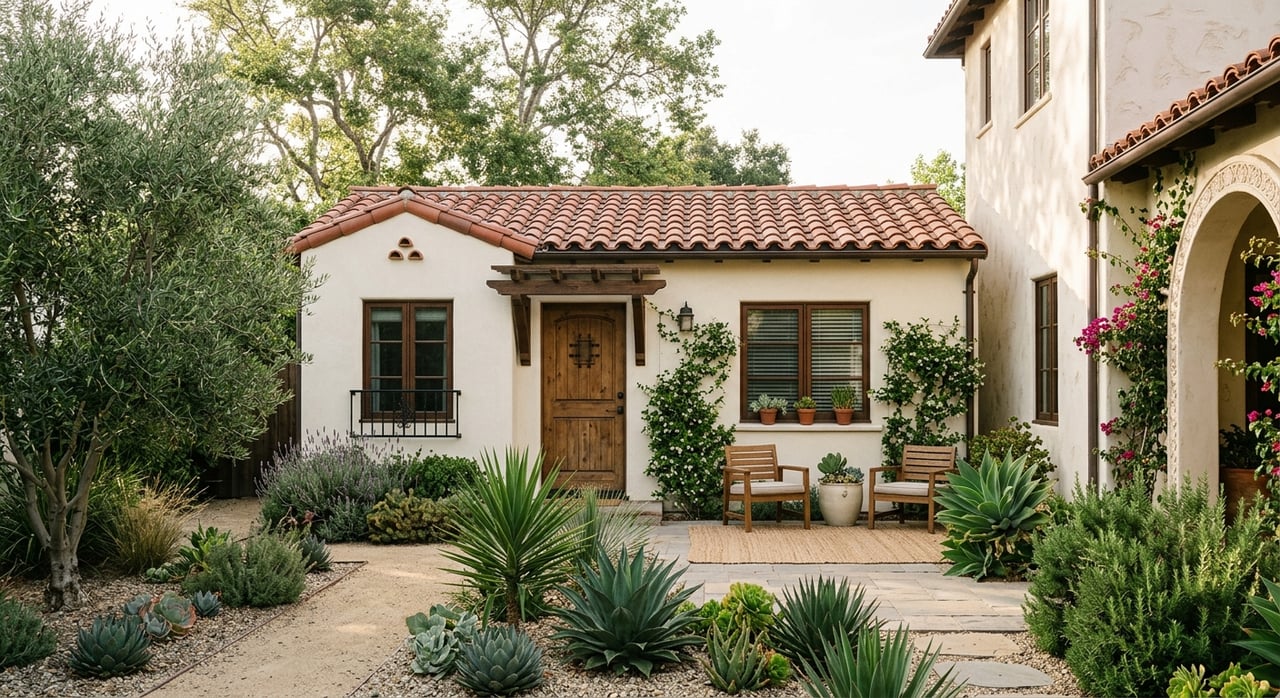
Exploring La Mesa ADU Opportunities Beyond Basics
April 30, 2026
April 30, 2026
Thinking about an ADU in La Mesa? You are not alone, and you have more options than many homeowners realize. Whether you are exploring space for family, future rental income, downsizing flexibility, or resale appeal, the real opportunity often comes from matching the right ADU type to your property, not just adding a backyard unit because it sounds appealing. This guide walks you through what goes beyond the basics in La Mesa, so you can evaluate your next step with more clarity. Let’s dive in.
ADUs are no longer a niche idea in La Mesa. The city describes ADUs and JADUs as flexible living space on the same property as a primary home, and its homeowner materials point to common goals like family housing, guest use, rental income, and downsizing. The state also recognizes ADUs as a practical housing option that can support extended family and help older adults age in place.
La Mesa has seen steady ADU activity in recent years. The city’s guidebook reported 223 ADU permits between 2018 and 2022 and projected about 80 permits per year through the 2021 to 2029 planning period. That tells you ADUs are not an unusual exception here. They are a well-established part of the local housing conversation.
If you are early in the process, La Mesa also offers useful homeowner tools through its Accessory Dwelling Units page, including preapproved plans, a guidebook, and online permit intake.
One of the biggest mistakes homeowners make is thinking of an ADU as only a detached backyard cottage. In La Mesa, the local ordinance distinguishes between attached ADUs, detached ADUs, conversion ADUs, multifamily ADUs, and JADUs. That means feasibility depends on your lot, your existing home, and your long-term goals.
In practical terms, the better first question is this: What kind of ADU fits your property best? A garage conversion may work beautifully on one lot, while a detached unit may make more sense on another. In some cases, a JADU may offer the simplest path to added flexibility with a smaller footprint.
For many La Mesa homeowners, a garage conversion or interior conversion can be the most straightforward option. Under the city ordinance, no setback is required for an ADU created within existing living area or within an existing garage or accessory structure that is converted to residential use.
That matters because setbacks are often one of the first practical barriers in new construction. A conversion can reduce that challenge, and it may also make better use of enclosed space you already have. If you own an older home with an underused garage, bonus room, or detached structure, this route may deserve a serious look.
There is another advantage. If a garage, carport, or covered parking structure is converted or demolished as part of the ADU project, the city does not require those removed parking spaces to be replaced.
A detached ADU may be the best fit if you want more privacy, separation, or a layout that does not depend on the existing house. In La Mesa, attached and detached ADUs can be up to 1,200 square feet, which gives you room to think beyond a studio or one-bedroom plan.
Still, detached units need a closer property-specific review. La Mesa generally requires 4-foot side and rear setbacks for new ADU construction unless the underlying zoning is more permissive. The city guidebook also encourages owners to assess topography, lot size, easements, and other site conditions before deciding what is realistic.
This is especially important on sloped lots or lots with unusual dimensions. A detached ADU may look feasible on paper but become more complex once grading, utility routing, or access is considered.
A Junior ADU can be a smart option if you want flexibility without a full second standalone unit. According to the California Department of Housing and Community Development, a JADU must be contained within a single-family residence and may not exceed 500 square feet of interior livable space.
JADUs can also share sanitation facilities with the existing home. If sanitation is shared, owner occupancy is required, and the owner must live in either the remaining part of the home or the JADU. JADUs also cannot be used as short-term rentals and, if rented, must be rented for periods longer than 30 days, as outlined in the state ADU handbook.
For some homeowners, that smaller scale is a plus. A JADU can serve as space for family, guests, or long-term housing use without requiring as much site work or square footage as a detached build.
The local rules in La Mesa are relatively ADU-friendly, but they still shape what is practical. The city ordinance allows attached and detached ADUs up to 1,200 square feet. It also says that lot coverage, open-space, or minimum-lot-size rules cannot block an ADU of at least 800 square feet if it has 4-foot side and rear setbacks and otherwise meets development standards.
For some homeowners, that 800-square-foot baseline can be a helpful planning benchmark. It means your lot may have more potential than you first assumed, especially if you were worried about lot coverage limitations.
Height and setback details matter too. If a new ADU structure does not meet underlying setback rules, the ordinance limits it to one story and 16 feet. That can affect both design and placement.
Parking concerns often stop homeowners before they start. In La Mesa, the ordinance says no new or additional parking spaces are required to create ADUs.
That is a big practical advantage, especially on smaller lots. It also means a garage conversion may be more realistic than many people assume, since parking removed through a conversion does not have to be replaced.
State guidance adds another layer of flexibility in some situations. The California ADU handbook notes that some parcels may qualify for parking exemptions, including certain properties within walking distance of public transit.
When homeowners estimate ADU costs, they often focus on construction alone. But permit fees, utility work, and site-specific requirements can make a meaningful difference.
La Mesa’s ordinance says ADUs under 750 square feet are exempt from impact fees, while larger units are charged proportionately. JADUs at 500 square feet or less are also exempt from impact fees under state guidance.
The city also notes that fire sprinklers are not required in an ADU if the primary residence is not required to have them. For some properties, that can simplify planning and cost assumptions.
You should also verify current fees before building a budget. La Mesa’s fee schedule page says fees are updated annually, and the posted FY 2024-2025 schedule states that the first $2,000 of incurred City fees is waived for ADU and JADU building permit applications.
If you want a more structured starting point, La Mesa offers preapproved ADU plans. According to the city, these range from a 224-square-foot studio to a 1,199-square-foot three-bedroom plan.
That can be helpful if you want to move past the blank-page stage and compare realistic layouts. Preapproved plans do not eliminate all work, though. The city says you still need project-specific site plans, Title 24 energy calculations, and supplemental documents.
There are also project-specific requirements to keep in mind. For example, the city states that soils reports are only needed if a project is over 500 square feet. That is one more reason the right ADU type and size can affect timing and cost.
La Mesa accepts ADU and JADU applications online through the MaintStar portal. The city also says the review process is ministerial rather than discretionary, and complete applications must be approved or denied within 60 days.
That timeline can sound fast, but the keyword is complete. Incomplete submittals can slow things down, so it helps to confirm the city checklist before finalizing plans or assumptions.
You should also be cautious about relying on general online maps alone. La Mesa’s guidebook says the city’s zoning map is a planning tool and is not guaranteed to be 100% accurate, so parcel-level verification matters before making final decisions.
If you are buying in La Mesa, ADU potential can be an important part of how you evaluate a property. A home with a large lot, usable side-yard access, an existing garage, or interior conversion potential may offer flexibility that is not obvious from the listing photos.
If you are selling, documented ADU potential may also shape buyer interest. Not every buyer wants to build right away, but many are looking for options they can grow into over time, whether for multigenerational living, future income, or aging in place.
This is where a property-specific strategy matters. Your best path depends on the lot’s shape, slope, existing improvements, and your long-term plans for using or marketing the home.
ADU rules are detailed, and they continue to evolve. The state handbook was updated with a January 2026 addendum, which is why it is smart to look at current city pages, the local ordinance, and up-to-date state guidance instead of relying on older summaries.
If your property is in an HOA, that may not be the roadblock you expect. State guidance says CC&Rs that effectively prohibit or unreasonably restrict ADUs or JADUs on single-family lots are void and unenforceable, though HOAs may still apply limited objective design standards that do not unreasonably increase cost or eliminate your ability to build.
A real estate conversation can help you connect those rules to real property decisions. Whether you are comparing homes, preparing to sell, or weighing improvement options, it helps to understand how ADU potential may affect usability, costs, and long-term value.
If you want help evaluating how ADU potential fits into your next move in La Mesa, connect with Select Living Realty Group. You can get clear, local guidance on how a specific property may fit your goals before you buy, sell, or plan your next step.
Stay up to date on the latest real estate trends.




Your Late-Summer Real Estate Game Plan



Moving to San Diego Family Guide: Top Schools, Neighborhoods & Amenities


A Data-Driven Guide to Maximizing Your Net Proceeds
Select Living Realty Group isn’t just about transactions—it’s about building lifelong relationships. From negotiating the best deal to guiding you through every step, we are always in your corner.