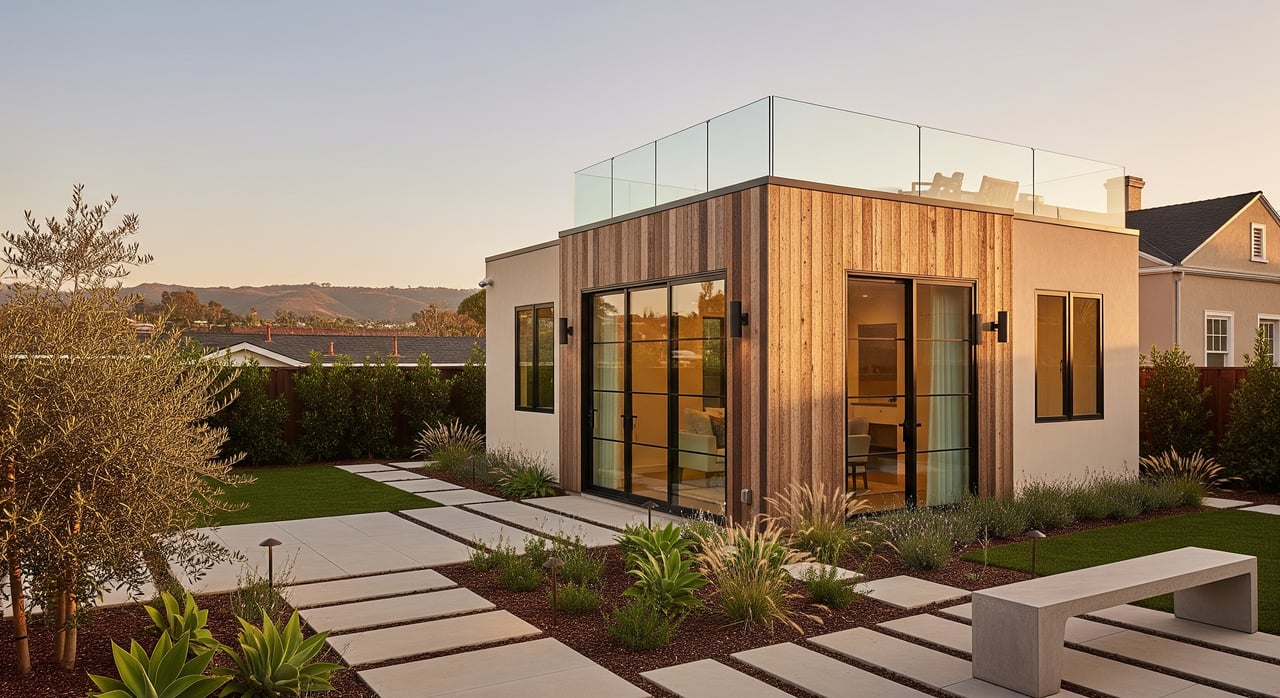
Thinking about adding an accessory dwelling unit to your La Mesa property? You are not alone. Many homeowners want more space for family or a steady rental to offset housing costs, but the rules and numbers can feel confusing. In this guide, you will learn the ADU basics for La Mesa, including common types, state rules that shape local permitting, rough costs, timelines, and a step-by-step plan to move forward with confidence. Let’s dive in.
ADU types you should know
Choosing the right ADU type sets your budget, permit path, and timeline.
- Attached ADU: New living space connected to your main home, such as a ground-floor addition with its own entrance and kitchen.
- Detached ADU: A separate backyard structure. This is popular when you have room behind the primary home.
- Garage conversion: Converts an existing garage or carport into a self-contained unit. Often the lowest-cost route if the structure and utilities cooperate.
- Junior ADU (JADU): An interior conversion up to 500 sq ft with a separate entrance and efficiency kitchen. JADUs are typically easier and less costly to permit.
- Basement or attic conversion: Turns existing interior space into a full unit.
- Multifamily ADUs: Special rules allow additions on multifamily properties; standards differ from single-family lots.
State guidance often references JADUs up to 500 sq ft and many cities allow ADUs up to about 1,200 sq ft. Always verify La Mesa’s exact size and design standards for your parcel with the Planning Division.
State rules that shape La Mesa
California laws make ADUs more feasible and set clear limits on local barriers.
- Ministerial review: If your ADU meets objective standards, the city must process your permit ministerially. State law sets a typical 60-day review window for a complete application. You can read the core statute in Government Code 65852.2 and the JADU section in 65852.22.
- Objective standards: Cities can apply clear rules for height, setbacks, and design as long as they are objective and not a discretionary barrier.
- Parking limits: State law restricts when cities can require on-site parking, such as when a property is near public transit or when converting existing space. Details vary by statute and local implementation.
- Fees and utilities: Impact and utility fees are often proportional to unit size. Smaller units may see reduced or waived fees in some cases.
- Owner-occupancy and rentals: State law limits certain owner-occupancy rules and clarifies rental protections. Local short-term rental restrictions may apply, so verify with the city.
For plain-English summaries and updates, review the California Department of Housing and Community Development’s ADU guidance at the HCD website.
La Mesa permitting basics to confirm
Your first stop should be the City of La Mesa Planning Division. Start with the City of La Mesa website and ask for parcel-specific ADU standards and any handouts. Key items to confirm include:
- Zoning and allowed ADU types for your lot.
- Maximum ADU size, height, and setbacks for attached, detached, and JADU options.
- Lot coverage and open-space rules that could affect a detached unit.
- Parking requirements and possible state exemptions.
- Estimated permit, impact, and utility connection fees, and whether smaller units receive fee reductions.
- Whether you are in a historic or special overlay area that affects design.
- Sewer capacity or septic requirements and potential upgrade needs.
- Short-term rental rules, business licenses, and any rental registrations.
- Utility metering rules for gas, water, and electric.
- Fire and building code requirements for egress and sprinklers.
- What constitutes a complete application package and expected review timelines.
Document everything you receive from the city. Written confirmation helps you design and budget with fewer surprises.
What an ADU costs in San Diego County
Actual costs vary widely by scope, site conditions, and finishes. Typical Southern California ranges include:
- Garage conversion: About $25,000 to $75,000+ depending on structural work, insulation, plumbing, and electrical upgrades.
- Interior conversion: Often $40,000 to $150,000+ based on size and systems.
- Detached new-build ADU: Commonly $150,000 to $400,000+ for small to medium units, with per-square-foot averages around $200 to $500+ depending on finishes and site complexity.
- Junior ADU (JADU): Often the lowest-cost option, sometimes from $10,000 to $80,000+ depending on scope.
La Mesa and the broader San Diego County market often trend to the higher end due to labor and material costs. Always obtain multiple local bids and include a contingency of 10 to 20 percent or more.
What drives your budget
- Site work such as grading, retaining walls, and utility trenching.
- Utility connections or upgrades for water, sewer, gas, and electric.
- Design, engineering, and permit fees.
- Finish level for kitchens, baths, and fixtures.
- Code requirements for fire, egress, and accessibility that apply to your project.
How long it takes
- Feasibility and design: weeks to months.
- Permit review: often weeks to a few months for complete ministerial applications. State law provides the 60-day review framework noted in Government Code 65852.2.
- Construction: months, with conversions finished faster than detached new builds.
Ways to pay for your ADU
Homeowners commonly use cash, a HELOC or home equity loan, a construction loan, or contractor financing. For renovation loans and program details, review guidance from HUD and consult local lenders about eligibility and terms.
Resale and rental impacts in La Mesa
A permitted ADU can increase appeal for buyers who value multigenerational living or rental income. Appraisers may consider rental income when supported by market data, or they may use comparable sales. The uplift depends on demand, location, and the quality and legality of the unit.
If you plan to rent, study local rental rules and landlord requirements. Long-term rentals can help offset mortgage costs, but returns depend on La Mesa’s rental market. Short-term rental allowances vary by city, so confirm current rules with La Mesa. Always carry proper insurance and speak with a tax professional about how to report rental income.
Unpermitted units often create problems at resale. They can reduce offers or require corrective work. Protect your investment by completing permits and final inspections and keeping clear documentation.
Step-by-step plan for La Mesa homeowners
- Research your parcel
- Check feasibility
- Review easements, slopes, trees, overlays, and utility access. Confirm sewer capacity or septic rules.
- Build a budget
- Gather local contractor estimates for your ADU type. Request rough permit and impact fee estimates from the city.
- Meet the city
- Ask for a pre-application meeting if available. Get written confirmation of standards for your lot.
- Design your plan
- Work with a designer or architect to meet objective standards. Use city checklists if provided.
- Submit for permits
- Provide a complete package to avoid delays. Track ministerial review timelines and respond quickly to comments.
- Arrange financing
- Compare HELOCs, construction loans, and other options.
- Build and inspect
- Hire licensed contractors. Complete all required inspections.
- Final approvals
- Obtain final sign-off or a certificate of occupancy. Keep all records.
- Rent or use
- If leasing, confirm applicable registrations and insurance, and follow local rules.
Helpful resources
Common pitfalls to avoid
- Skipping a parcel-specific talk with Planning and discovering a setback or utility issue later.
- Underestimating site work and connection costs for detached units.
- Submitting an incomplete permit application and stalling the 60-day review timeline.
- Ignoring documentation. Keep permits, plans, and final inspections for appraisal and resale.
Ready to plan your ADU?
If you want to explore how an ADU could fit your goals, we are here to help you think through resale value, rental potential, and timing in today’s East County market. Reach out to the community-rooted team at Select Living Realty Group for a friendly, no-pressure conversation about next steps.
FAQs
What size ADU can I build in La Mesa?
- State guidance often references ADUs up to about 1,200 sq ft and JADUs up to 500 sq ft, but you should confirm La Mesa’s exact size and design standards with the Planning Division.
Do I need on-site parking for an ADU?
- State law limits when cities can require parking, such as for certain conversions or locations near transit. Ask La Mesa Planning to confirm how the rules apply to your parcel.
How much does a detached ADU cost locally?
- In Southern California, many detached ADUs fall in the $150,000 to $400,000+ range depending on size, site work, and finishes. Obtain local bids and include a contingency.
Can I rent my ADU short term in La Mesa?
- Short-term rental rules vary and may require permits or licenses. Verify current restrictions and requirements directly with the City of La Mesa.
How long does ADU permitting take in California?
- For a complete application that meets objective standards, state law provides a typical 60-day ministerial review framework. Actual timelines depend on completeness and city workload.
Do I need separate utility meters for an ADU?
- Rules for separate gas, water, and electric meters depend on city and utility providers. Confirm metering options and connection fees with La Mesa and your utility companies.